 Español
  Français
  Deutsch
  Nederlands
  Suomi
Suomi  Türkçe
  Sign in
Retail Fleet Trends in 2025: What telematics data reveals about peak season performance
Retail fleets have always operated under pressure, but using Lightfoot data, we can see the pressure becoming more concentrated, more intense, and more revealing. Analysis of anonymised Lightfoot telematics data highlights just how dramatically activity increases in the run-up to Christmas.
Retail fleets vs other sectors: doing more with less
Across all Lightfoot customers. 1.13 billion miles were driven in 2025. Retail fleets alone accounted for 478 million miles, a substantial share of total mileage that reflects the pace and frequency of retail operations. This is particularly striking given that retail fleets represented a much smaller proportion of the 83,000 vehicles active on the platform yet consistently recorded higher mileage and longer driving hours than many other sectors.
In 2025:
- 83,000 vehicles were driven with Lightfoot and 1.13 billion miles travelled
- 19,000 retail vehicles were driven and 478 million miles travelled, accounting for a disproportionate share of mileage

Christmas peak season: A month that redefines retail fleet demand
Of the 168,000 drivers using Lightfoot in 2025, 89,000 of those were retail drivers, meaning more than half of all drivers on the platform were operating in retail environments. Those drivers collectively spent 22 million hours on the road – out of 43.5 million total driving hours logged across all customers – reinforcing how reliant retail fleets are on large, active driver populations.
Nowhere was this more evident than during peak season. In the month leading up to Christmas, which includes Black Friday, retail fleets drove around 50 million miles – almost 10% of their entire annual mileage compressed into just four weeks. During that same period, retail drivers spent 2.2 million hours behind the wheel, highlighting the scale of operational pressure during the busiest trading window of the year.
This spike in activity had a clear impact on energy consumption. Over the course of 2025, retail fleets used 22 million gallons of fuel and 11.5 million kWh of electricity reflecting the mix of ICE and electric vehicles n modern retail fleets. In the run-up to Christmas alone, energy demand surged, with retail fleets using 2.2 million gallons of fuel and 2 million kWh electricity in just one month.
Efficiency and sustainability gains despite peak pressure
Despite this intensity, retail fleet still delivered. Across the year, retail customers saved:
- 18.5 million kilograms of CO2
- 1.5 million gallons of fuel
- 800,000 kWh of electricity
- Equating to £850 million in fuel savings
Even during the most demanding weeks before Christmas, retail fleets achieved:
- 2 million kilograms of CO2 savings
- Saved 154,000 gallons of fuel
- Saved 135,000 kWh of electricity
- Delivered £85 million in fuel savings
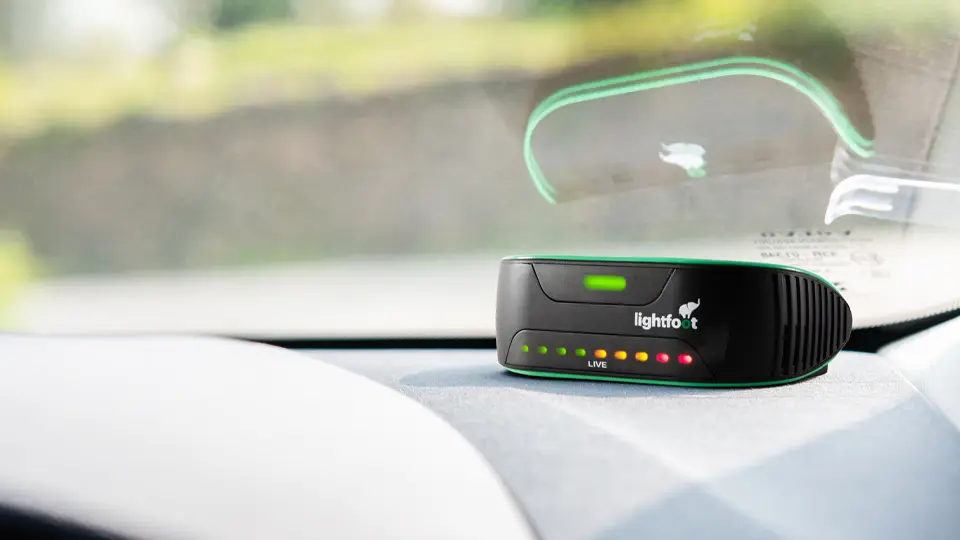
Retail fleet efficiency is not seasonal, it is foundational. During peak periods, when mileage, energy use, and driver hours rise sharply, behaviour-led efficiency and driver support become even more critical to maintaining performance, controlling costs, and meeting sustainability targets.
Rising delivery expectations and increasing pressure of margins will only amplify these trends. The fleets that succeed will be those that can maintain consistency, support their drivers, and delivery efficiency – even when demand is at its highest.
Find out how Lightfoot can support your retail fleet, just like we’re supporting fleets like Tesco, Asda, and Iceland.